
Machine Vision Inspection Without Specialized Skills
Make It Easy to Commission, Integrate, and Scale
The Inspection Requirement You Keep Getting Asked to Deliver
What if your end customer asks for label verification three weeks before design freeze? Or inline barcode grading. Or inline defect detection. Even with clear requirements, you now have a new subsystem to specify, integrate, and commission, on the same schedule you had before, with the same team, and no extra budget.
Are you expected to deliver inspection capability as standard? The problem is that vision has never been designed for machine builders. Traditional machine vision systems need lighting rigs, algorithm tuning, threshold calibration, and a supplier who supports their hardware but not your machine. Connecting a third-party camera to your existing PLC architecture means middleware, custom communication layers, and development time nobody budgeted for.
The cost of getting this wrong is concrete. Project overruns. Delayed machine delivery. Callbacks to site for inspection tuning. The benefits of getting it right are equally concrete: machines shipped with future-ready capability.
If You Build Machines, This Will Sound Familiar
OMRON works with machine builders across Europe every day. These are the conversations we have most often.
- "We're not vision specialists, and we don't want to be.": Your team designs and builds machines. The expectation that you also master optics, AI training data, and image processing algorithms is unrealistic. You need inspection components that behave like any other well-specified automation component: defined inputs, defined outputs, reliable in the field.
- "Vision setup always runs over schedule.": Traditional vision systems take days to configure. Lighting needs adjusting. Thresholds need tuning. Then production conditions change and the whole process starts again. That's time you don't have and project risk you can't carry.
- "Our customer wants GS1 Sunrise 2027 compliance and we have six months." : The transition from 1D to 2D barcodes is generating real demand from end users. Your customer expects you to deliver a machine that handles it. ISO barcode verification is not your core competency, and it shouldn't have to be.
So where do you start?
Quality Inspection That Works the Way Your Machine Does
OMRON builds automation for machine builders. That means the inspection components on this page were designed by engineers who understand your constraints: commissioning schedules, mixed PLC environments, end-customer compliance requirements, and the commercial reality of delivering machines on time.
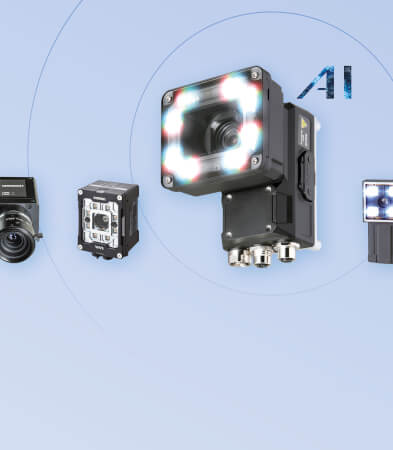
Two principles guide how we have built the FHV7-AI and VHV5-F for machine builder applications.
1. Set Up Inspection in Minutes, Not Days
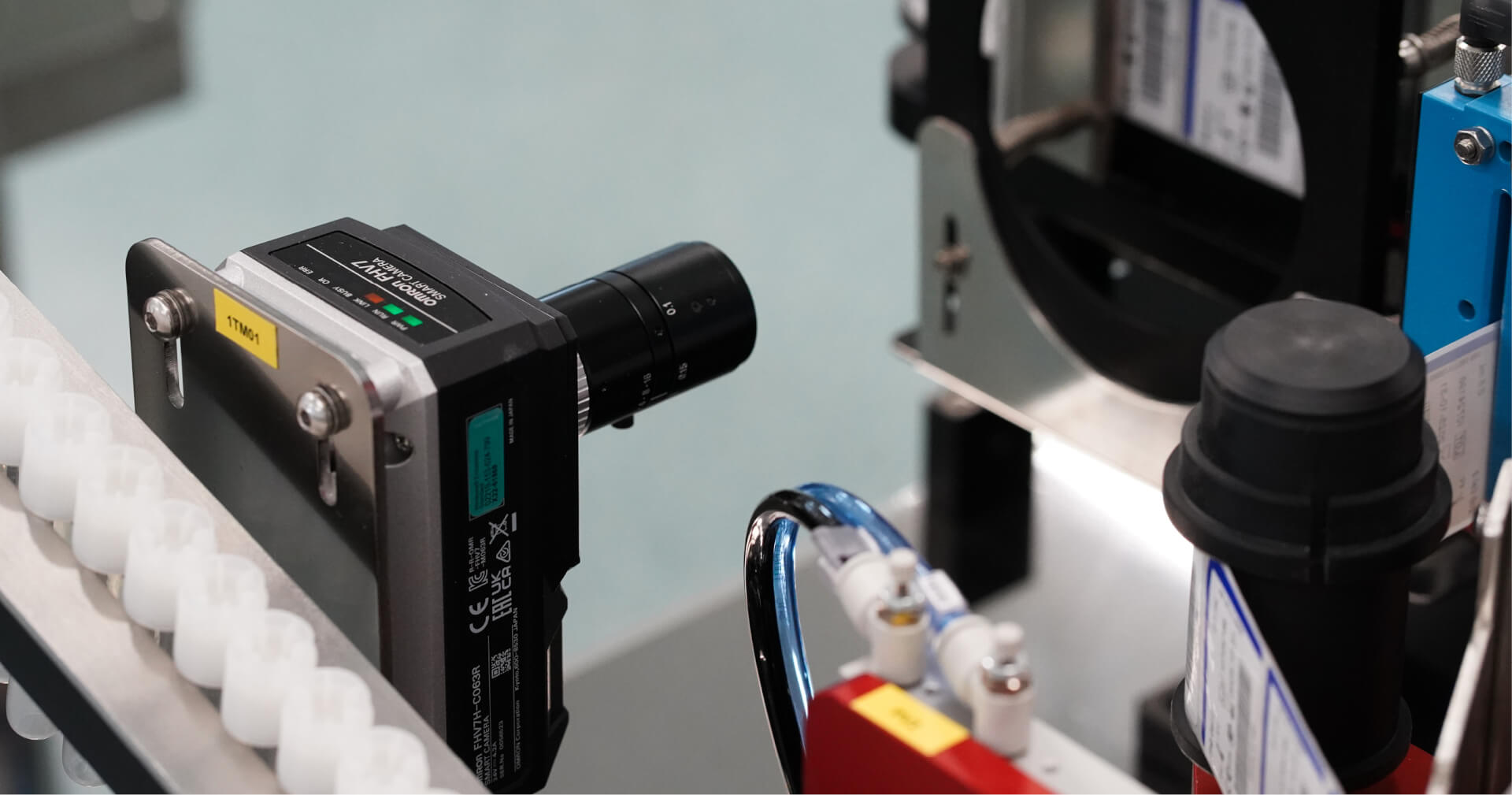
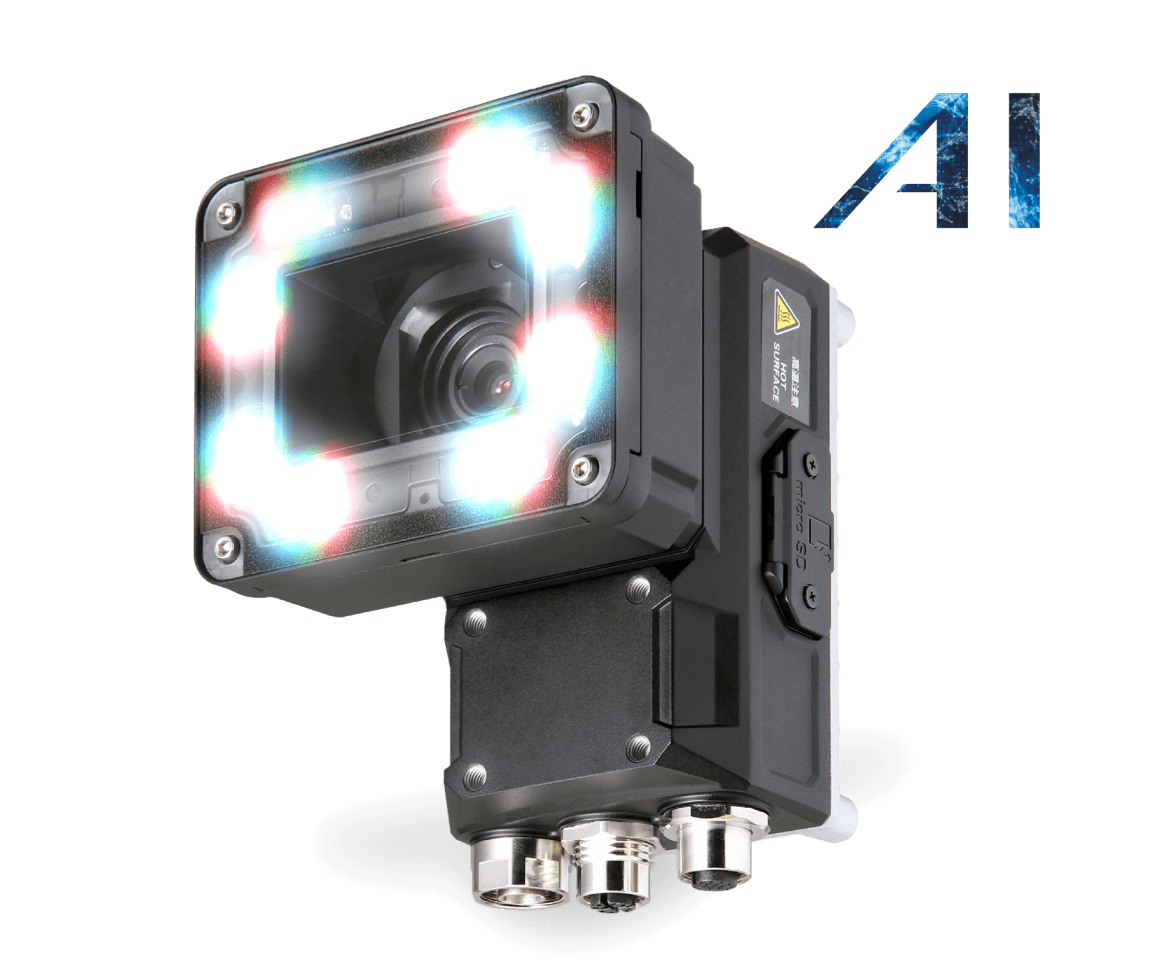
Vision setup time is the number-one reason machine builders avoid adding inspection capability. The FHV7-AI smart camera removes that barrier by design.
Install the Remote Operation Tool on a Windows PC, open the step-by-step setup workflow, provide samples of good and bad parts, and the AI does the rest. One-touch auto focus and guided lighting selection from pre-defined presets handle image adjustment. The workflow takes care of master registration, AI training, and threshold setting automatically. You don't need to understand threshold algorithms. You need to show the system what good looks like, and what bad looks like. That's it.
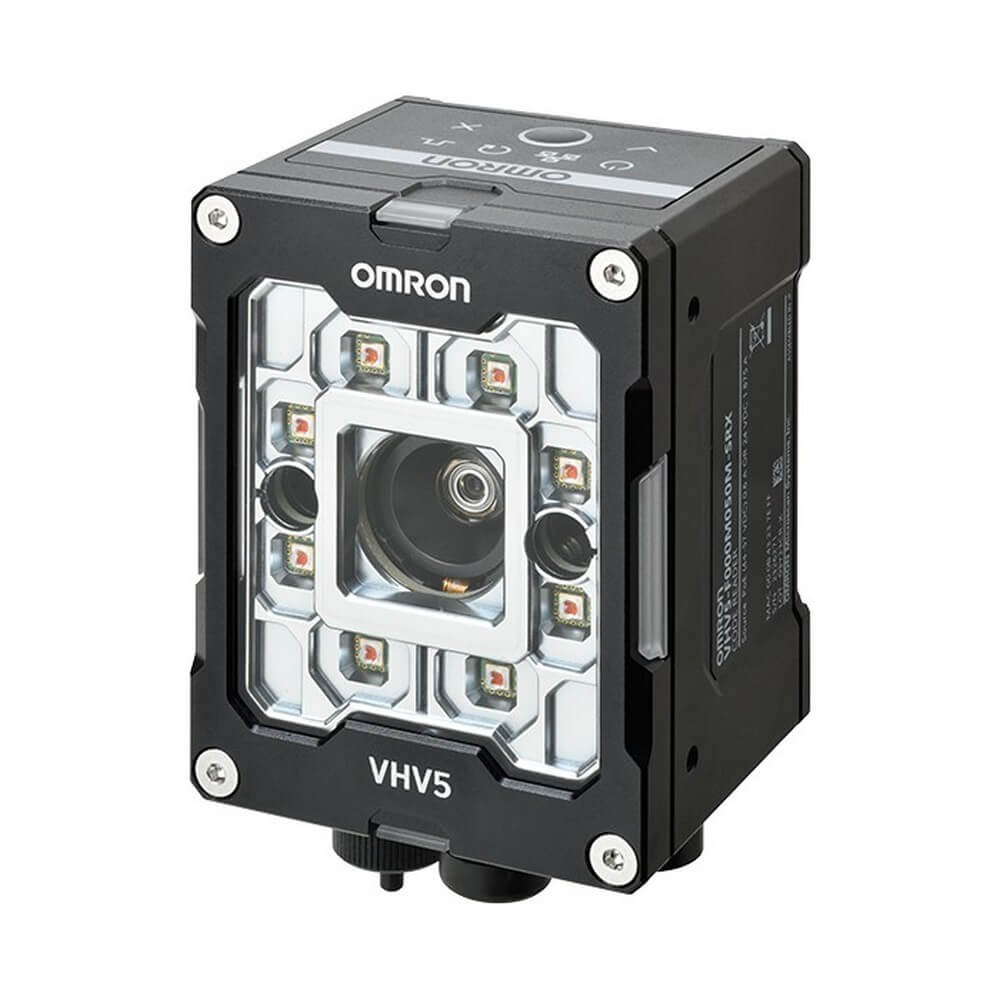
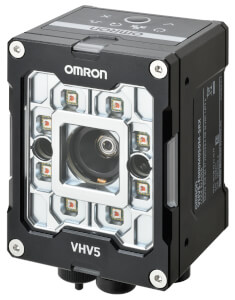
For code reading and verification, the VHV5-F's "Learn All Codes" function* scans the field of view, identifies every code type present, and creates decode jobs automatically. No manual configuration. No decode expertise required.
Setup time is measured in minutes, not shifts. Which means your machine ships on schedule.
2. Integrate Into Any Machine Architecture via Standard Protocols
Integration shouldn't be a project in itself.
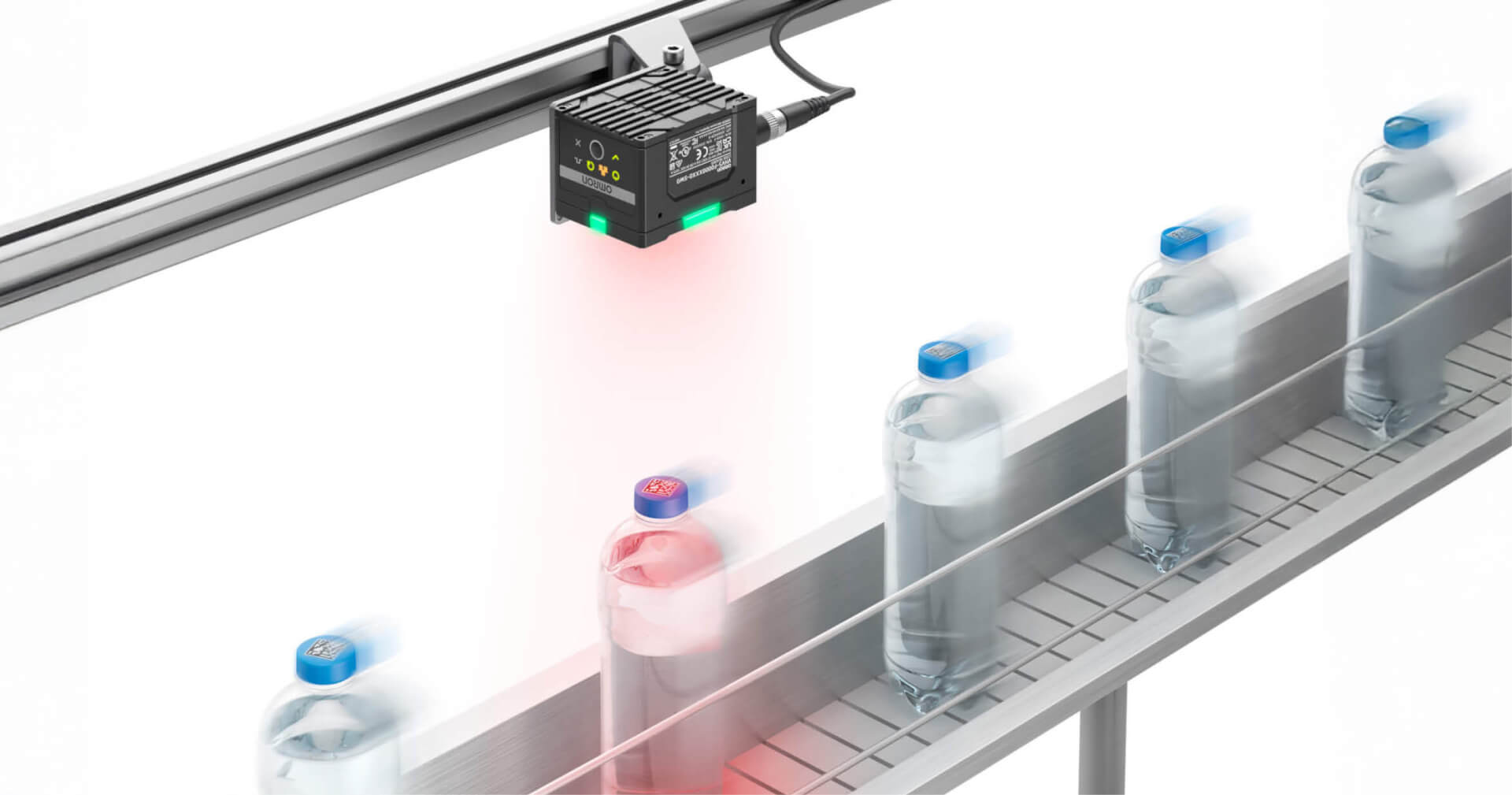
Both the FHV7-AI and VHV5-F communicate over EtherNet/IP or PROFINET, the same protocols your existing PLC already uses. Inspection results, reject signals, and quality data flow directly into your control architecture via digital I/O or standard fieldbus. No middleware. No custom communication layers. No parallel integration project.
When you're building on OMRON's Sysmac platform, the integration goes deeper. Inspection outcomes flow natively into the same NX/NJ controller that manages your motion, safety, and I/O, enabling closed-loop quality control in the same scan cycle. But you don't need OMRON controls to use these sensors. They're designed for mixed environments as standard.
Want to know more about how to implement machine vision? Read our article below
Machine Builders Who Shipped with OMRON Vision
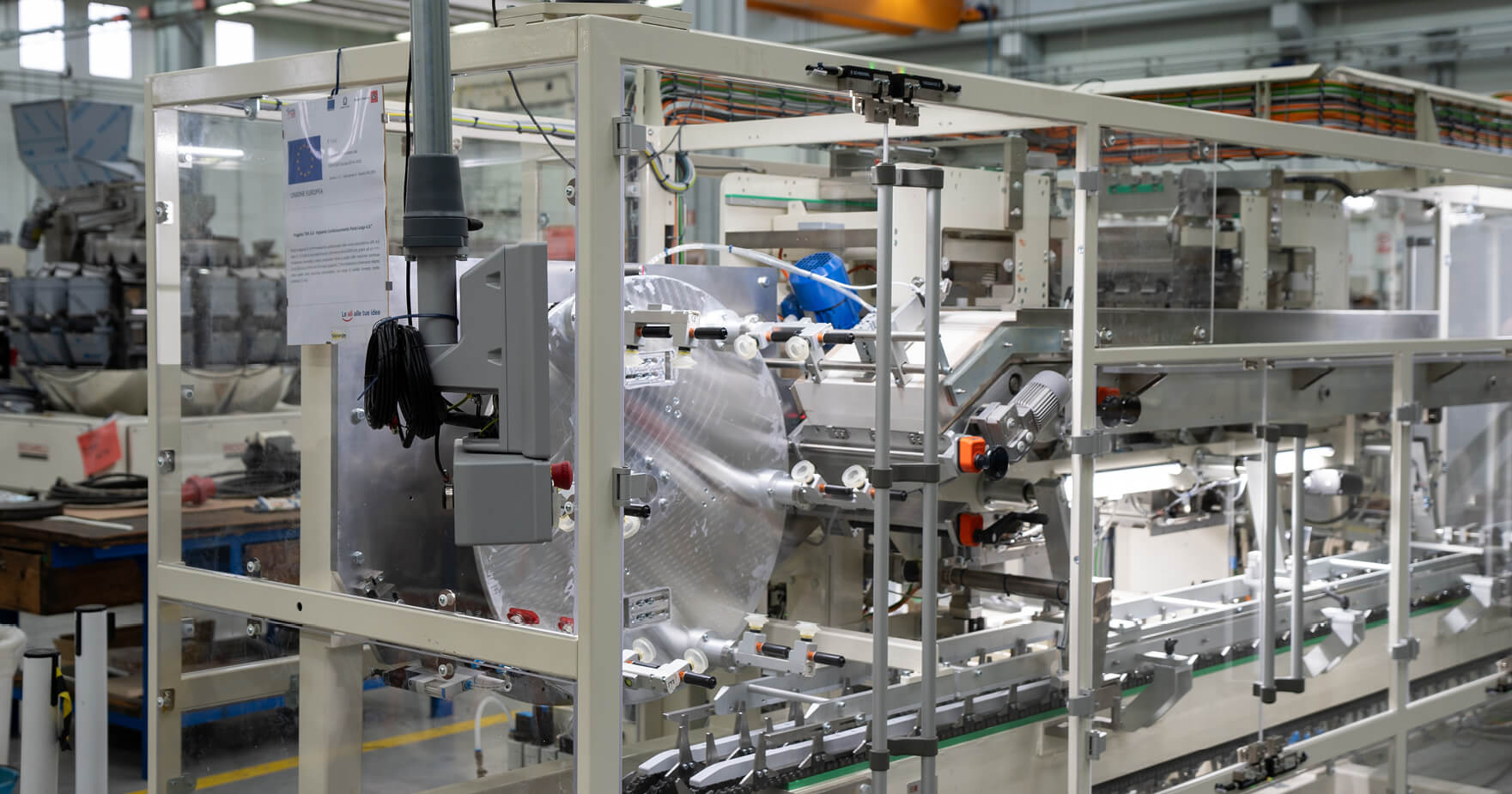
Ricciarelli SpA, a machine builder with more than 150 years in food packaging machinery, needed to deliver a horizontal cartoning machine for a major Italian pasta brand with zero-defect manufacturing as a hard contractual requirement. OMRON served as the primary machine vision partner and on-site technical support throughout the entire development process.
The machine runs at 140 cartons per minute with full OCR/OCV marking verification, label inspection, and direct MES integration. Every parameter is controllable from the machine HMI. Every carton. Every cycle. Every time.
The numbers: 140 cartons/min · zero defects · full OCR/OCV verification · HMI-controlled parameters · direct MES integration
-

Zero defects with machine vision: Ricciarelli ensures the perfect closure of spaghetti packaging
Ricciarelli's new horizontal cartoning machine for long pasta utilizes OMRON's vision systems to verify the effective closure of the packaging and perfect OCR/OCV marking. It offers the capability to control all variables from the HMI and integrate production data directly from the enterprise management system. Read more:
04:58
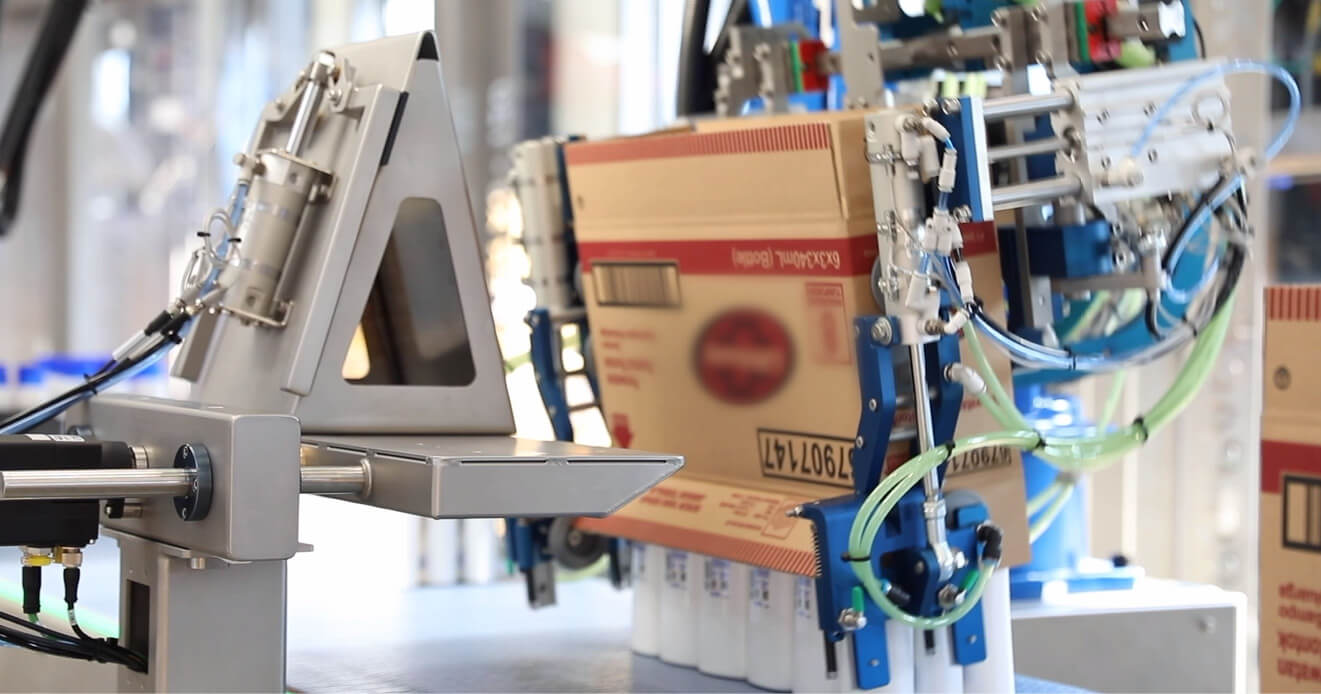
MACCO built a fully automated vial labelling machine for Werfen, a global in-vitro diagnostics manufacturer with operations in 30+ countries. The challenge: label and barcode verification on vials that must remain vertical throughout the process to protect reagent integrity. One OMRON vision system. One code reader. Verified accuracy at 1,000 labelled tubes per hour with real-time rejection of any non-conforming unit.
"With OMRON's robotic and vision system, we can handle the product vertically and control its quality right to the end." - Bruno Costantini, Plant Manager, Werfen
The numbers: 1,000 labelled tubes/hour · 30% reduction in cycle time · real-time rejection of non-conforming tubes

-

Werfen achieves 1000 labelled test tubes per hour for clinical laboratories with vertical labelling
Werfen’s collaboration with MACCO, OMRON, and Marini Pandolfi has led to an innovative solution for automated test tube labelling. The system uses OMRON’s SCARA robots and smart vision cameras to enable maintaining test tubes in an upright position, preserving reagent quality while reducing manual handling. With a capacity of 1000 tubes per hour and a 30% reduction in cycle time, the solution ensures efficient production, exceptional quality control, and traceability. Through virtual simulation, Werfen was able to optimize reliability and reduce costs, achieving an innovative, dependable solution that meets the stringent demands of clinical laboratories worldwide. For more information, please visit: #MakeitOMRON #makeitexcellent
06:13
FG Robosys BV, a Dutch machine builder, integrated OMRON vision cameras across a robotic bottling line for cosmetics production. Four cameras on a single CPU enabled product monitoring without traditional grippers. The result was an 80-minute saving per production run, and a machine that almost never needs format parts changed.
"Not only from the technology side but also from the human support side." - Benedictus Tang, CEO, FG Robosys
The numbers: Changeover time cut from 90 min to under 10 min · near-zero format parts · near-zero unplanned downtime

Fg-robosys Klantreferenties
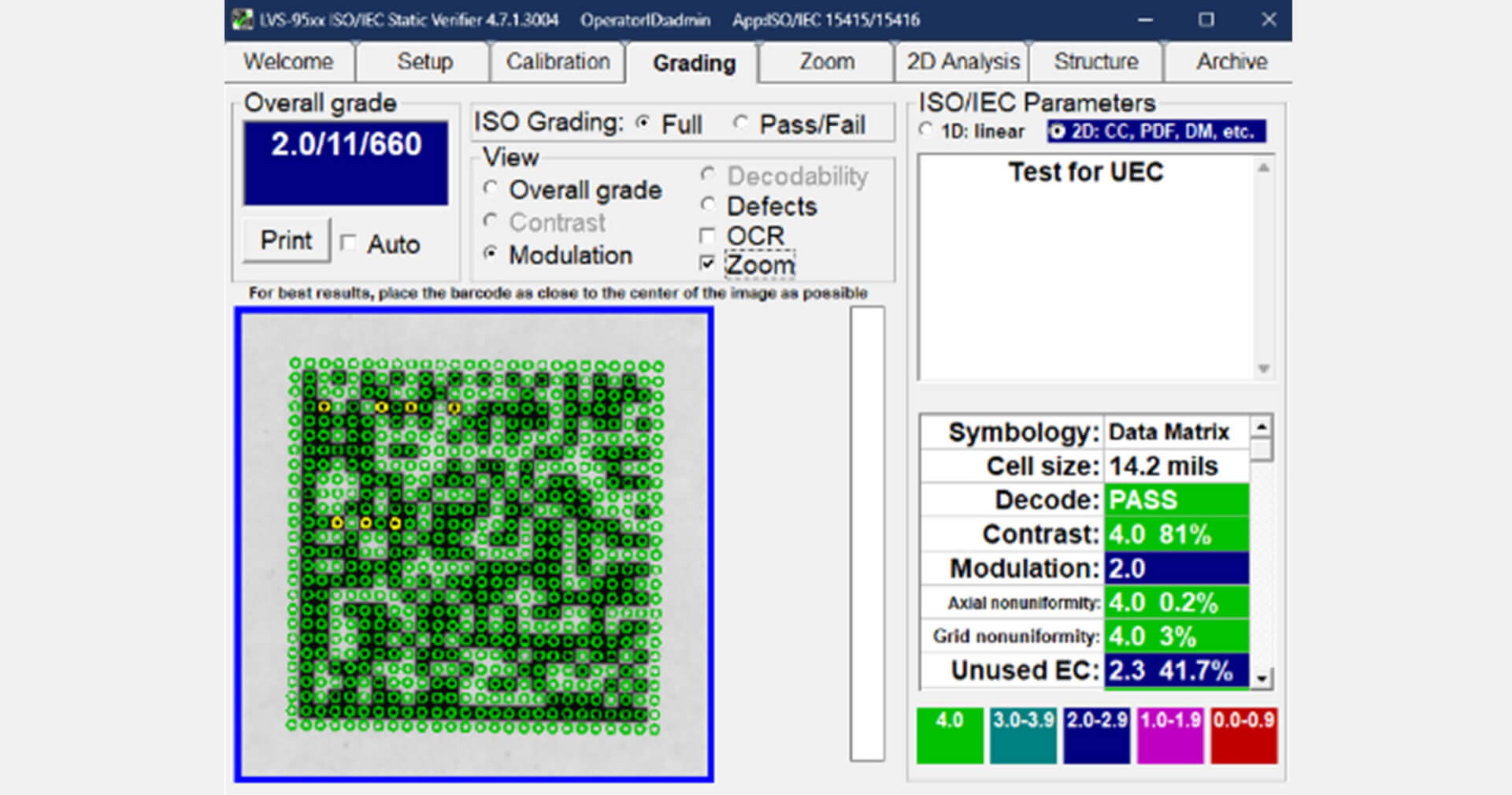
What is GS1 Sunrise 2027 and what does it actually require from machine builders?
GS1 Sunrise 2027 marks retail's transition from 1D barcodes (UPC/EAN) to 2D codes (Data Matrix, QR, GS1 Digital Link). From 2027, major retailers will require 2D barcodes on consumer products. Your end customers in packaging, food, pharma, and consumer goods will ask their machine suppliers to deliver machines that handle this transition.
In practice, that means four obligations for the machines you build: the machine must be able to read 2D codes at production speed; it must verify print quality to an ISO standard (not just confirm a successful scan); it must log verification data for traceability; and it must handle both 1D and 2D codes during the transition period, since the world won't flip overnight.
The VHV5-F reads and verifies both formats today. Read the full context in our GS1 Sunrise 2027 blog post and download the practical checklist for the six steps your customers need to take.

Ready to Add Inspection to Your Next Machine?
The Machine Vision for Machine Builders guide covers the five questions every machine builder should work through before specifying a vision component:
- inspection task,
- working distance,
- space and mounting,
- lighting constraints,
- and integration path.
It includes a pre-integration checklist, a smart camera vs. full vision system decision guide, and FHV7-AI application notes, written specifically for machine design engineers, not vision specialists.
Download your free guide ->
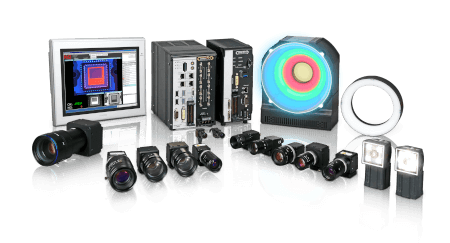
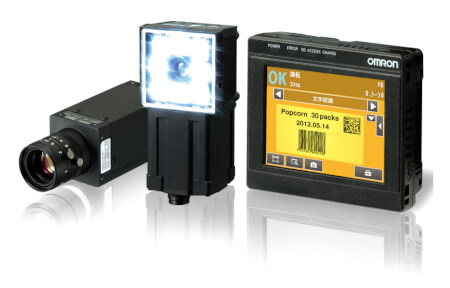
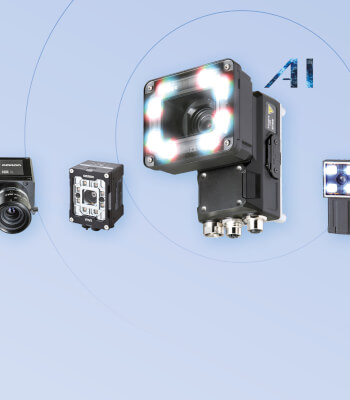
OMRON machine vision products, a selection
-
Snellere machinebediening, camera's voor elke toepassing
-
AI-detectiecamera voor slimmere vision en lagere kosten
-
De nieuwe norm voor beeldinspectie en codeverificatie
-
Krachtige codelezer met automatische scherpstelling
We Automate Machines
Connect with the OMRON team and talk to an Vision Specialist or organize a visit in one of our local Proof of Concept Labs.

-

innovative-Automation: solving manufacturing issues through innovation
What does the future of manufacturing require? Higher productivity, achieving carbon-neutrality and work satisfaction? To meet these social demands in a well-balanced way requires overcoming many dilemmas that have been difficult to require at the same time. OMRON has developed a manufacturing concept for industrial automation to help balance these demands. innovative-Automation. Read more:
03:38
Call us to learn more
Contact your local sales officeGot a question?
Talk to a Vision Specialist todayThe Inspection Requirement You Keep Getting Asked to Deliver
Thank you for submitting your request. We will come back to you as soon as possible.
Wij ondervinden technische problemen. Uw formulierinzending is niet gelukt. Onze verontschuldigingen hiervoor, probeer het later nog een keer. Details: [details]